In Fig 2741 and Both Batteries Are Ideal What Is the Arte at Which Energy
ane. Introduction
Modern art, an initial form of rejection of past currents, fills a long chapter of history that began at the end of the Nineteenth Century and represents the desire for experimentation towards new techniques and visual forms. It adult through a vast serial of artistic currents, often also very different from each other involving illustrious names from Romanticism to Futurism, Cubism and Surrealism, and contemporary art, notwithstanding in abiding evolution, in the search for new materials, forms, and subjects.
A modern painting is characterized by fabric bases that give a 3-dimensional shape to the picture using unlike effects: striped, spatulated, sponged, etc. This polymaterial nature makes these paintings extremely exposed to biodeteriogenic attacks, which can irreversibly damage this heritage of humanity. In addition to poly-materials, information technology is possible to distinguish two types of paints, solvent-based paint and h2o-based paint. Water-based paints are the most susceptible to attack past microorganisms that survive in this element [1].
Biodeteriogens (bacteria, archaea, fungi, lichens, and insects) are a serious danger for the conservation of all cultural heritage including that made with modern materials. Climate, conservation, the chemistry, and the composition of the materials ascertain the rate of microbial colonization and are at the basis of biodeterioration phenomena. Therefore, 1 of the chief challenges in managing biodeterioration is the control of microbial growth to avoid the complete destruction of the canvass painting. The decontamination of these works requires the utilize of chemicals with a loftier toxic potential for both humans and the environment, besides loftier costs for museums [2,three].
Several measures are planned to filibuster, control, or cease the presence of biodeteriogens (particularly molds) on cultural heritage materials. Disinfection practices are performed before any other manipulation to avert the spreading of fungal spores potentially present on artworks, which may be unsafe for both the artworks and human health. Chemical formulations such as Biotin R, Biotin T, and Preventol® RI80/RI50 are oftentimes used by restorers to preclude or treat fungal colonization. Biotin R is composed by iodiopropynyl butylcarbamate (IPCB) and north-octyl-isothiazolinone (OIT), dissolved in 2(2-butoxy-ethoxy), while Biotin T by OIT and a quaternary ammonium salt. The start is generally used at three% in ligroin, petroleum essence, or white spirit, while the second one at 3% in demineralized water, ethyl alcohol, or butyl acetate. Preventol® RI80/RI50 is a full-bodied formulation with a broad spectrum characterized by quaternary ammonium salts by and large diluted from 2–five% in water or ethanol [4,5,6].
Although these are the main products in utilize for the restoration of paintings, gimmicky fine art paintings present many critical issues as they are characterized past substances that are potentially sensitive to nearly of the solvents used (including water when used without irresolute their conductivity and pH).
Furthermore, information technology is highlighted that sensitization in addition to mutagenicity (ability to induce genetic mutations), carcinogenicity (ability to induce cancer), teratogenicity (ability to induce anomalies in embryonic development), and embryotoxicity (ability to induce toxic furnishings on the embryo) are the primary toxic effects attributed to chemicals generally used in formulations for artwork restoration [7,viii,9].
Bug related to both the restoration practices of modern artworks and human health have resulted in the study of green restoration products past several groups, who take focused their attention on the effectiveness of diverse natural substances. Among these, essential oils (EOs) and hydrolates (Hys), both obtained through the distillation of vegetable parts of aromatic plants, are raising much involvement in Italy and abroad. Both EOs and Hys are natural products with antimicrobial activity, merely they differ because the former take a high anti-microbial activity and are hydrophobic natural phytocomplexes so concentrated that they cannot be used a pure because of potentially toxicity. The latter are natural hydrophilic products, with a lower anti-microbial activity due to the farthermost dilution of their active components, but they are more versatile, condom, and inexpensive. This last feature depends on Hys being by-products of the distillation process aimed for EO extraction from diverse plant organs.
Hys have only recently been discovered in the cultural heritage surroundings because their characteristics make them less aggressive than EOs and applicable in contexts where the latter cannot be practical such every bit the restoration of paper works. In this context, the fungicidal activity of C. aurantium var. amara Hy was exploited in combination with the gel of gellan to clean paper artworks and at the same fourth dimension inactivate the fungal biodeteriogens [10].
The purpose of this work was to exam both in vitro and in situ the anti-fungal effectiveness of an emulsion based on Citrus aurantium L. var. amara Hy and Cinnamomum zeylanicum Blume (from bark) EO in lodge to identify new cytocidal formulations useful in the decontamination of mod paintings, which should be economical, but about importantly accept a low environmental impact and high safety for human health.
ii. Materials and Methods
two.i. Canvas Samples
Table i shows the three types of techniques used to perform canvases in order to imitate mod paintings. For in vitro microbiological test, the first blazon of samples was used, consisting of 51 small canvas squares (SCSs) of ii × two cm, performed with modern techniques. For in situ experiments, the second type of samples was used, consisting of two big canvas samples simulating modernistic painting techniques carried out every bit described in Tabular array 1. The specimen back up was a rough sail with a cotton flap and industrial preparation. The sail was and so stretched on a custom-fabricated wooden frame (26 cm high × xviii cm wide × 2.five cm thick).
two.2. Headspace-Gas Chromatography and Mass Spectroscopy Analysis
The chemical analyses of vapor and liquid phase C. zeylanicum EO were conducted by a headspace connected to the gas chromatograph coupled with a mass spectrometer (Clarus 500—Perkin Elmer, Waltham, MA, USA). A Varian Factor Iv VF-i capillary cavalcade was used and helium as the gas carrier at a flow of 1 mL/min. The temperature program of oven GC was equally follows: 60 °C for 5 min and ramped to 220 °C at a charge per unit of v °C/min for 20 min. The ionization energy of MS was 70 eV and the scan range 40–450 one thousand/z. The compounds were identified by the comparison of mass spectra with those of authentic standards from the Wiley and NIST libraries. Furthermore, the linear retention indices (LRIs) were calculated with reference to the series of n-alkanes (C8–C30 aliphatic hydrocarbons, Ultrasci, Bologna, Italy). For the quantification of the identified compounds, GC-FID analysis was performed following the same weather condition reported to a higher place. Relative percentages were obtained by superlative area normalization, and no internal standard or correction factors were used. The analysis was repeated in triplicate.
two.three. Spray Formulation
In this piece of work, the emulsion named "Zeylantium green emulsion" (Zege) was previously tested in vitro to evaluate its antimicrobial effectiveness on canvas samples fabricated according to modern techniques and infected with a fungal suspension specified in Section two.iv. (data not shown). The Zege was composed by 0.03% v/v of the Cinnamomum zeylanicum EO from bawl (Pranarom International, Ghislenghien, Kingdom of belgium) in 99.97% v/five of Citrus aurantium var. amara Hy from flowers (Erboristeria Magentina s.r.l., Turin, Italy).
2.4. In Situ Microbiological Examination
The in situ fungicidal effectiveness of the spray conception (see Section 2.three) was assessed using the SCSs. All canvases were previously sterilized by UV low-cal for 80 min (40 min per side). A 50 μL fungal suspension characterized by fungi mainly associated with biodeteriogenic attack of artworks (2.5 × 10five CFU/mL, equal amount of Aspergillus niger (ATCC9642), Aureobasidium pullulans (ATCC 15233), Chaetomium globosum (ATCC 6205), Cladosporium cladosporioides (ATCC 16022), Alternaria alternata, and Penicillium citrinum) was inoculated on the dorsum of the canvases. Once dried, ane to 5 sprays (capacity of 55 μL/spray i.e., 14 μL/cm2 of each SCS) of the formulation were applied on the dorsum of SCSs for 3 h, v h, or 24 h. The treated side of the canvas was sown on PDA (Oxoid, Basingstoke, UK) and incubated for 7 d at 30 °C. Treatment efficacy was evaluated at the end of the incubation. Untreated and uninoculated sheet (positive and negative command, respectively) were included in the tests as well. Every treatment was performed in triplicate.
two.five. Chemical–Physical Analysis
Anile and unaged samples were chemically and physically analyzed (see the next sections) pre- and post-anti-microbial handling, to evaluate if the application of the spray mixture (Section 2.3) could change the chemical–physical or structural backdrop of the sail, preparatory layers, and/or pigment film.
2.5.1. Ageing Atmospheric condition
"Solar box 3000e RH Xenon" (provided with a xenon lamp, outdoor filter (280 nm), and radiation power of 550 Due west/m2) was used to age BCSs for 3 wk in club to assess the treatment efficacy progression in time. The aging process was achieved with hot/humid conditioning cycles at xxx °C and relative humidity betwixt 55% and 99% for 72 h, interposed with 55% atmospheric humidity cycles for 96 d. During the months in which the specimens aging took place, the bike was endlessly reiterated.
ii.five.2. Spray Handling
The BCSs were cautiously released from the support, positioned in a glass container with the paint layer heading down; a Melinex® sheet separated the glass and paint surfaces. An amount of 50 sprays (14 μL/cm2) of freshly prepared mix (meet Section 2.3) was employed for the treatment: 25 sprays were applied to the back of the canvas samples and 25 on a sail of acid-free absorbent paper placed in direct contact with the back of the sheet. To prevent the movement of the textile fibers and to amend maintain both surfaces in contact with 1 another, five weights were laid on the upper part of the absorbent paper. In the cease, the glass container was secured with a special lid to avoid the evaporation of the volatile components and incubated at thirty °C for v h. The handling was repeated in triplicate.
2.5.three. pH Measurements
The pH measurement was based on the Cremonesi (2012) technique [4]: 3 discs (3 mm of bore) of ii% (w/v) agar (AGAR AGAR—ANTARES, Bologna, Italian republic) were assault the surface of each sample for 3 min. The disc was placed in direct contact with the sensor, and the pH was evaluated using the "ISFET Mini-Lab®" model. The pH was measured before and after natural handling on both aged and unaged canvases, and the pH divergence betwixt before and afterward treatment was calculated for each color, painting technique, and ageing status. Data were submitted to a two-tailed t-test to appraise statistical differences determined by treatment The CoStat 6.iii bundle (Cohort, Monterey, CA, USA) was used to perform the t-exam.
2.5.4. Colorimetric Measurements
The "Konica Minolta CM-2600d" (with diffuse illumination, viii° display with simultaneous measurement of specular component included (SCI) and specular component excluded (SCE) with γ rays, λ 360–740 nm) was used for the colorimetric measurements. Colorimetric data are reported every bit a function of standard CIE D65 illumination and 10° (CIE 1964) supplementary standard observer excluding the specular component of radiation. The colorimetric coordinates L*, a*, b* were adamant as a function of the CIEL*a*b 1976 color space [10]. Differences in color (ΔE), chroma (ΔC), and brightness (ΔL), together with the mean (G) and standard difference (SD), were calculated starting from the L*, a*, b* values co-ordinate to the 2000 CIE guidelines [xi]. All measurements were performed in triplicate. Every Δ value was interpreted as follows: 0–1 (chromatic difference not detectable by the human eye), 1–3 (modest chromatic departure), 3–half dozen (detectable divergence), or >half dozen (large difference). The values greater than 3 were the only ones evaluated as significant since the values ≤ 3 were ephemeral or considered irrelevant.
2.vi. Handling of the Artwork
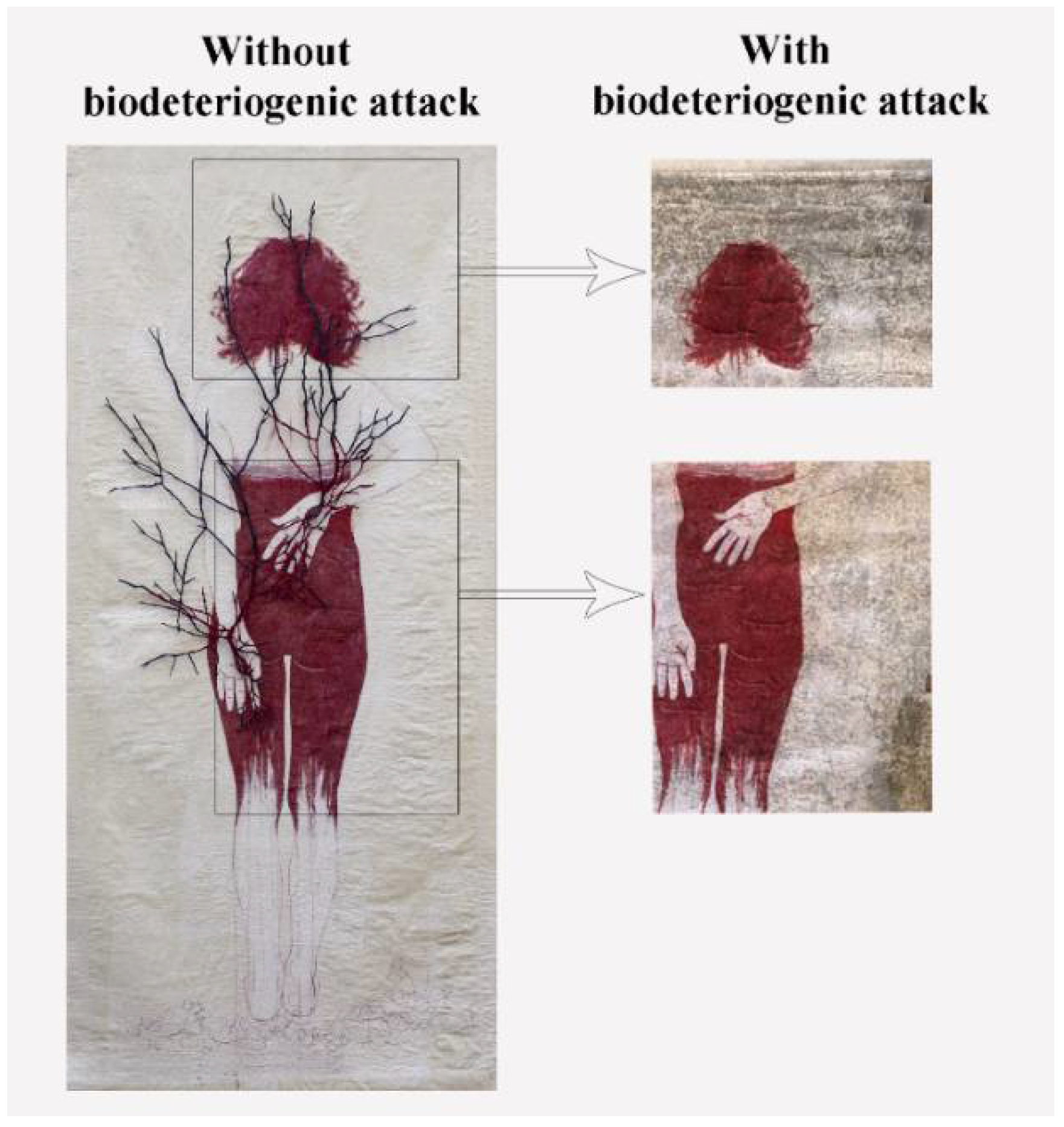
The contemporary fungal-colonized painting named "Du sang, de la Mort et de la Volupté" by Ilaria Margutti (Effigy 1; yr: 2017, dimensions: 80 × 200 cm) exhibited during the "Volta e Rivolta" shown at the Collective Art Gallery, Galleria Elettra (Sant'Anna del Furlo, Pesaro Urbino, Italy) was used every bit a instance study after the authorization of the artist. Painting canvas samples were treated with the Zege formulation in order to verify its antifungal action.
ii.6.1. Sampling and Microbial Analysis of the Artwork
Before the spray treatment, three cotton swabs (Boettger, Paul Boettger GmbH & Co., KG, Bodenmais, Germany) and 3 fungi-tapes (Scientific Device, Glenview, IL, United states of america) were nerveless on the painting to place the microbial biodeteriogens. Samples were sown on the following nutrient agars: Mueller Hinton agar, malt extract agar, and PDA (all by Oxoid, Basingstoke, UK) and incubated at 30 °C for 7 d. After the incubation, the identification of the fungal strains was performed using matrix-assisted light amplification by stimulated emission of radiation desorption ionization time-of-flight mass spectrometry (MALDI-TOF MS) (Bruker Daltonics, Bruker, Bremen, Germany).
2.half dozen.two. Spray Cytocidal Treatment
To verify the anti-fungal activity of the spray mixture, half dozen samples of canvas of 2 × 2 cm with an axiomatic macroscopic contagion were taken: 3 were treated with the spray mixture, while the remaining 3 were non treated (pre-treatment controls). The treated ones were placed in a sterile container, and 4 sprays were applied (capacity of 130 µL/spray). The container was sealed with laboratory picture (Parafilm®, Bemis Company, Inc., Neenah, WI, USA) to avert the evaporation of the mixture components and incubated at 30 °C for 5 h. Afterwards, both the treated and the untreated samples were seeded on PDA (Oxoid, Basingstoke, UK) nutrient agar and incubated at 30 °C for 7 d.
3. Results
3.1. Gas Chromatography and Mass Spectroscopy Analysis
A total of twenty-four compounds were detected and listed in Table ii. Oxygenated monoterpenes were the most abundant components both in the liquid stage and in the vapor phase (ix.six% and 34.7%, respectively). Cinnamaldehyde was the major compound of the C. zeylanicum EO (66.0% liquid stage and 24.5% vapor stage) followed by β-caryophyllene (five.8%; nineteen.two%), linalool (4.9%; 17.2%), 1,8-cineole (four.four%; 17.5%), and p-cymene (three.8%; 8.2%). (E)-Cinnamyl acetate was detected only in the liquid phase (5.v%), while α-thujene reached an important level only in the vapor stage (8.3%).
3.2. In Situ Microbiological Exam
Table three shows data from the in situ tests conducted with SCS. The Zege spray showed a fourth dimension- and dose-dependent effectiveness. Three sprays were active after 24 h of incubation, while five sprays are constructive already subsequently 2 h of incubation.
three.3. Ageing Conditions
The modernistic techniques were highly resistant to the aging process. Techniques present on BCSs exhibited only some mechanical stress caused past the cotton canvas, which is particularly sensitive to water.
three.4. pH Measurements
pH data are showed in Tabular array 4. Variations of the pH after treatment were less than 0.v units of pH. There were both increases and decreases, which were meaning at p < 0.v in 4 cases out of twenty-four.
3.5. Colorimetric Measurements
Table 5 shows the DE values obtained subsequently the treatment of aged and unaged canvases. Most of the detections (twenty out of xx-4) showed values of the colour difference (∆Due east) lower than 3, while but iv weather showed significant changes. Specifically, after handling, vinyl bluish showed significant variation in both unaged and aged samples, while bluish and carmine alkyd showed variations only in unaged samples. Carmine and green colors did not show variations in whatever of the three techniques.
3.6. Sampling and Microbial Assay of the Artwork
Microbiological analysis revealed that the artwork was contaminated by Rhizopus stolonifer, Penicillium spp., Alternaria alternata, and Aspergillus spp. The major area of the painting was colonized by R. stolonifer.
iii.7. Spray Cytocidal Handling
Figure 2 shows the cytocidal effectiveness of the treatment. The Zege was applied as described in Department 2.vi.2; at the end of the incubation fourth dimension, all treated samples were free of fungal growth.
4. Discussion
Due to both the nature of the binders and the different products and materials, the conservation and restoration of paintings of contemporary art require a different approach than ancient artworks. Acrylic, alkyd, and vinyl binders, too as young oil are substances potentially sensitive to near of the solvents used (including water). Young oil, for example, is subjected to swelling and leaching and is sensitive to polar solvents and chelators. Constructed binders are subject field to aging and wrinkling of the pictorial film, the migration of fatty acids, and other components that cause blooming, stiffening of the moving picture, cracking, rapid yellowing and darkening (alkyd folder), photodegradation due to UV, cross-linking, deacetylation (vinyl binder), strong swelling, and hypersensitivity to polar organic solvents and water (acrylic binder) [xi,12,13].
In recent years, researchers of cultural heritage take been turning their attention to green restoration, looking for new natural products that are at the aforementioned time active confronting biodeteriogens and safe for human health. Several enquiry groups are studying the potential uses of EOs and, more recently, Hys (by-products of distillation) in restoration practices. Every bit of late, both Origanum vulgare 50. and Thymus vulgaris L., Coridothymus capitatus 50., Syzigium aromaticum L., and Cinnamomum zeylanicum Blume EOs have been in situ studied confronting biodeteriogens of stone artworks [14,15,16,17]. Thymol and eugenol (major components of T. vulgaris and O. vulgare EOs) accept shown interesting results, in the restoration of wall paintings [18]. In ex situ studies, O. vulgare EO was tested on biodeteriogenic fungal strains isolated from the Serbian monastery Holy Virgin Church building [14]. Borrego et al. tested Southward. aromaticum, Allium sativum L., and O. vulgare EOs against biodeteriogens isolated from the National Archive of the Commonwealth of Republic of cuba and the Historical Archive of the Museum of La Plata, Argentina [19]. Other ex situ studies have tested the efficacy of Cinnamomum camphora J. Presl, Helichrysum italicum Roth, Lavandula angustifolia Miller, and Cymbopogon winterianus Jowitt ex Bor EOs against fungal biodeteriogens [14,16,17,18,nineteen,20]. C. zeylanicum EO has been poorly studied in restoration. In particular, ii types of applications were tested: the first was through the nebulization of this EO to preserve aboriginal cloth fibers, while the second exploited the effectiveness of the EO encapsulated in psyllium-alginate beads [21,22]. Because the antimicrobial efficacy already established in the literature of C. zeylanicum EO and its vapors, we decided to study the activity of this EO in clan with the C. aurantium var amara Hy already known every bit an anti-fungal treatment for cultural heritage [10].
Our in vitro results relating to the cytocidal activity of the OE (MFCaverage = 0.five% 5/v) and of the Hy (MFCaverage = 2.half dozen% five/5) and the data obtained in this written report confirmed the in vitro and in situ antimicrobial activity of Zege confronting fungal biodeteriogenic strains.
In vitro experiments indicated that a concentration of 28 μL/cmtwo of Zege was constructive on modernistic art canvases already 5 h after treatment. After Zege application, both unaged and anile canvases did not show significant pH variations. The only notable exceptions are both acrylic ocher and vinylic green unaged samples, which withal showed but very slight variations. Significant variations on aged canvases (vinyl red and alkyd blue) are not of keen practical interest as the mod artworks that require restoration are, at the moment, unaged. Instead, the colorimetric measurements showed that but the acrylic colors do not undergo significant variations afterwards the treatment. Some vinyl and alkyd colors may undergo important variations. Therefore, farther research is needed for these types of colors.
Although the mechanisms of action of C. zeylanicum EO have non been elucidated in the field of cultural heritage, other studies showed that the liquid or vapor phase of its major component, cinnamaldehyde, inhibits molds by inhibiting ATPases and cell wall biosynthesis and by altering the membrane structure and integrity [23]. Similarly, linalool alcohol, which is the main component of C. aurantium var. amara Hy, has shown, among other properties, an antimicrobial property by altering the prison cell membrane and inhibiting the germination of biofilm [24]. Therefore, it is plausible that the synergy between the EO and the Hy contained in Zege acts on fungal biodeteriogens, inhibiting the fungal biofilm present on the artwork and killing the fungal cells through the mechanisms gear up out.
Following the in vitro results, it was decided to take and care for samples obtained from the no-dye canvass of the painter Ilaria Margutti'southward modern artwork. Tests carried out on no-dye canvases of the "Du sang, de la Mort et de la Volupté" painting confirmed the fungicidal activity of the Zege conception past showing, 5 h later treatment, the complete killing of the fungal load present on the painting (Figure two).
If formulated past hand, the spray mixture must exist made at the moment, otherwise the small-scale concentration of volatile terpene components decays over fourth dimension with consequent loss of the cytocidal effectiveness. To optimize the activity of the Zege spray, the canvass must be isolated from the surrounding surroundings, creating a confined surroundings capable of retaining the volatile terpenic compounds in direct contact with the artwork, increasing its effectiveness. Furthermore, for at least 5 h, the artwork must be placed at a controlled temperature (about 30 °C) in gild to induce the germination of spores of biodeteriogenic fungi and allowing the mixture to kill them in their weakest vital stage. Finally, it is appropriate to administrate the treatment on the dorsum of the canvas and on acid-gratuitous paper sheets to be placed in contact with the back to avert the evaporation of the production.
Moreover, Zege is safe for the health of restorers because the amount of chemicals, reported by the reference arrangement (IFRA) as toxic, is in line with thresholds indicated for products for man use. In item, the concentration of safrole is enormously lower than 0.1% (0.00018% v/five), and that of cinnamaldehyde is between 0.014% and 1.viii%, as required for products for human utilise (the Zege cinnamaldehyde content equals 0.02%).
5. Conclusions
Zege was studied to be a possible culling to biocides normally used in the restoration of canvas artworks. The spray formulation showed encouraging and statistically pregnant results regarding the stability of the pH and colour values later on the treatment of contemporary artworks fabricated with acrylic colors. In improver, it is a greenish formulation, safe for human being health and the environment, releasing a delicate fragrance more often than not well accepted by the operators. Even so, farther studies are needed to validate the effectiveness of Zege on paintings made with other mod techniques and colonized by a greater number of biodeteriogens.
Author Contributions
Conceptualization, M.D.V. and D.D.Fifty.; methodology, L.V., S.One thousand. and A.P. and M.M.B.; formal analysis, Grand.D.V., Chiliad.1000., L.B. and S.G.; investigation, Yard.D.Five., L.V., L.S. and A.P.; resources, P.Thou. and Chiliad.Due south.; data curation, M.D.V., K.M. and M.R.P.; writing—original draft preparation, M.D.V. and K.M.; writing—review and editing, Chiliad.D.V., D.D.L., M.G.B., F.B., P.M. and Thou.S. All authors accept read and agreed to the published version of the manuscript.
Funding
This research received no external funding.
Institutional Review Board Statement
Not applicable.
Informed Consent Argument
Not applicable.
Data Availability Statement
Not applicable.
Acknowledgments
The authors thank the creative person Ilaria Margutti for having immune the efficacy tests of the Zeylantium greenish emulsion on his artwork. Finally, Lori Morrison is gratefully acknowledged for manuscript proofreading.
Conflicts of Interest
The authors declare no conflict of interest.
References
- Odokuma, L.O.; Berebon, D.P.; Ogbonna, C.B. Potential Biodeteriogens of Indoor and Outdoor Surfaces (Coated with Gloss, Emulsion and Textcoat Paints). IOSR J. Pharm. Biol. Sci. 2013, seven, 12–xix. [Google Scholar] [CrossRef]
- Poyatos, F.; Morales, F.; Nicholson, A.W.; Giordano, A. Physiology of biodeterioration on canvas paintings. J. Cell. Physiol. 2018, 233, 2741–2751. [Google Scholar] [CrossRef] [PubMed]
- Sterflinger, One thousand.; Piñar, Grand. Microbial deterioration of cultural heritage and works of art—Tilting at windmills? Appl. Microbiol. Biotechnol. 2013, 97, 9637–9646. [Google Scholar] [CrossRef] [PubMed]
- Cremonesi, P. L'ambiente Acquoso per Il Trattamento di Opere Policrome. Metodologie, Tecniche due east Formazione Nel Mondo del Restauro, 2d ed.; Il Prato Publishing Business firm s.r.l.: Padova, Italia, 2012. [Google Scholar]
- Borgioli, L.; de Comelli, A.; Pressi, Yard. Indagini Microbiologiche per La Verifica Dell'efficacia Di Alcuni Biocidi Esenti Da Metalli Pesanti. Progett. Restauro 2006, 11, 24–29. [Google Scholar]
- Borgioli, L.; Pressi, M.; Secondin, S. Valutazione Dell'efficacia Di Prodotti Biocidei Attraverso Test Microbiologici Di Laboratorio e Saggi Applicativi in Cantiere. Progett. Restauro 2003, 9, 39–46. [Google Scholar]
- Hwang, J.-H.; Jeong, H.; Jung, Y.-O.; Nam, Chiliad.T.; Lim, Chiliad.-M. Peel irritation and inhalation toxicity of biocides evaluated with reconstructed man epidermis and airway models. Food Chem. Toxicol. 2021, 150, 112064. [Google Scholar] [CrossRef] [PubMed]
- da Silva, C.M.T. Novel Biocides for Cultural Heritage, Évora. Available online: https://dspace.uevora.pt/rdpc/bitstream/10174/21001/1/Tese%20doutoramento%20Mara%20Silva_vers%c3%a3o%20final.pdf (accessed on 13 January 2022).
- Schmitz-Felten, Due east.; Kuhl, 1000.; Graveling, R. Occupational Exposure to Biocides (Disinfectants and Metal Working Fluids)—OSHWiki. Available online: http://oshwiki.eu/wiki/Occupational_exposure_to_biocides_(disinfectants_and_metal_working_fluids) (accessed on 12 Jan 2022).
- Di Vito, M.; Bellardi, M.K.; Colaizzi, P.; Ruggiero, D.; Mazzuca, C.; Micheli, 50.; Sotgiu, Due south.; Iannuccelli, S.; Michelozzi, M.; Mondello, F.; et al. Hydrolates and Gellan: An Eco-innovative Synergy for Prophylactic Cleaning of Newspaper Artworks. Stud. Conserv. 2018, 63, 13–23. [Google Scholar] [CrossRef]
- Mecklenburg, M.F.; Charola, A.Due east.; Koestler, R.J. New Insights into the Cleaning of Paintings: Proceedings from the Cleaning 2010 International Briefing, Universidad Politécnica de Valencia and Museum Conservation Institute. Smithson. Contrib. Mus. Conserv. 2013, 3, 1–243. [Google Scholar] [CrossRef]
- Cremonesi, P. Dipinti ad Olio Moderni. Pulitura Superficiale eastward Rimozione di Vernici; Il Prato: Padova, Italia, 2020. [Google Scholar]
- Bonino, V.Due east.S. Dall'olio All'acrilico, Dall'impressionismo All'arte Contemporanea; Il Prato: Padova, Italian republic, 2016. [Google Scholar]
- Stupar, Grand.; Grbić, M.L.; Simić, G.S.; Jelikić, A.; Vukojević, J.; Sabovljević, Thousand. A sub-aerial biofilms investigation and new approach in biocide application in cultural heritage conservation: Holy Virgin Church building (Gradac Monastery, Serbia). Indoor Built Environ. 2012, 23, 584–593. [Google Scholar] [CrossRef]
- Stupar, K.; Grbić, Thou.L.; Džamić, A.; Unković, N.; Ristić, One thousand.; Jelikić, A.; Vukojevic, J. Antifungal activity of selected essential oils and biocide benzalkonium chloride confronting the fungi isolated from cultural heritage objects. S. Afr. J. Bot. 2014, 93, 118–124. [Google Scholar] [CrossRef]
- Palla, F.; Bruno, M.; Mercurio, F.; Tantillo, A.; Rotolo, Five. Essential Oils as Natural Biocides in Conservation of Cultural Heritage. Molecules 2020, 25, 730. [Google Scholar] [CrossRef] [PubMed]
- Spada, Chiliad.; Cuzman, O.A.; Tosini, I.; Galeotti, K.; Sorella, F. Essential oils mixtures as an eco-friendly biocidal solution for a marble statue restoration. Int. Biodeterior. Biodegrad. 2021, 163, 105280. [Google Scholar] [CrossRef]
- Veneranda, Yard.; Blanco-Zubiaguirre, L.; Roselli, Yard.; Di Girolami, 1000.; Castro, Thou.; Madariaga, J.Thousand. Evaluating the exploitability of several essential oils constituents equally a novel biological handling against cultural heritage biocolonization. Microchem. J. 2018, 138, 1–half dozen. [Google Scholar] [CrossRef]
- Borrego, South.; Valdés, O.; Vivar, I.; Lavin, P.; Guiamet, P.; Battistoni, P.; de Saravia, S.G.; Borges, P. Essential Oils of Plants as Biocides against Microorganisms Isolated from Cuban and Argentine Documentary Heritage. ISRN Microbiol. 2012, 2012, 826786. [Google Scholar] [CrossRef] [PubMed]
- Elsayed, Y.; Shabana, Y. The outcome of some essential oils on aspergillus niger and alternaria alternata infestation in archaeological oil paintings. Mediterr. Archaeol. Archaeom. 2018, 18, 71–87. [Google Scholar] [CrossRef]
- Matusiak, Thousand.; Machnowski, Westward.; Wrzosek, H.; Polak, J.; Rajkowska, K.; Śmigielski, K.B.; Kunicka-Styczyńska, A.; Gutarowska, B. Application of Cinnamomum zeylanicum essential oil in vapour phase for heritage textiles disinfection. Int. Biodeterior. Biodegrad. 2018, 131, 88–96. [Google Scholar] [CrossRef]
- Campanella, 50.; Angeloni, R.; Cibin, F.; Dell'Aglio, E.; Grimaldi, F.; Reale, R.; Vitali, M. Capsulated essential oil in gel spheres for the protection of cellulosic cultural heritage. Nat. Prod. Res. 2021, 35, 116–123. [Google Scholar] [CrossRef] [PubMed]
- Shreaz, S.; Wani, W.A.; Behbehani, J.M.; Raja, Five.; Irshad, Yard.; Karched, M.; Ali, I.; Siddiqi, W.A.; Hun, L.T. Cinnamaldehyde and its derivatives, a novel course of antifungal agents. Fitoterapia 2016, 112, 116–131. [Google Scholar] [CrossRef] [PubMed]
- An, Q.; Ren, J.-N.; Li, 10.; Fan, Grand.; Qu, Due south.-Due south.; Song, Y.; Li, Y.; Pan, S.-Y. Contempo updates on bioactive properties of linalool. Food Funct. 2021, 12, 10370–10389. [Google Scholar] [CrossRef] [PubMed]
Figure ane. "Du sang, de la Mort et de la Volupté" by Ilaria Margutti. On the left is the painting before the biodeteriogenic assault. On the right, the details of the painting after the biodeteriogenic attack.
Figure one. "Du sang, de la Mort et de la Volupté" by Ilaria Margutti. On the left is the painting before the biodeteriogenic attack. On the right, the details of the painting later the biodeteriogenic assail.
Effigy 2. Canvases taken from the artwork of contemporary art. "Untreated" canvases had no kind of treatment. "Treated" canvass were treated with three sprays of the Zege emulsion and incubated 24 h.
Effigy two. Canvases taken from the artwork of contemporary fine art. "Untreated" canvases had no kind of treatment. "Treated" canvas were treated with three sprays of the Zege emulsion and incubated 24 h.
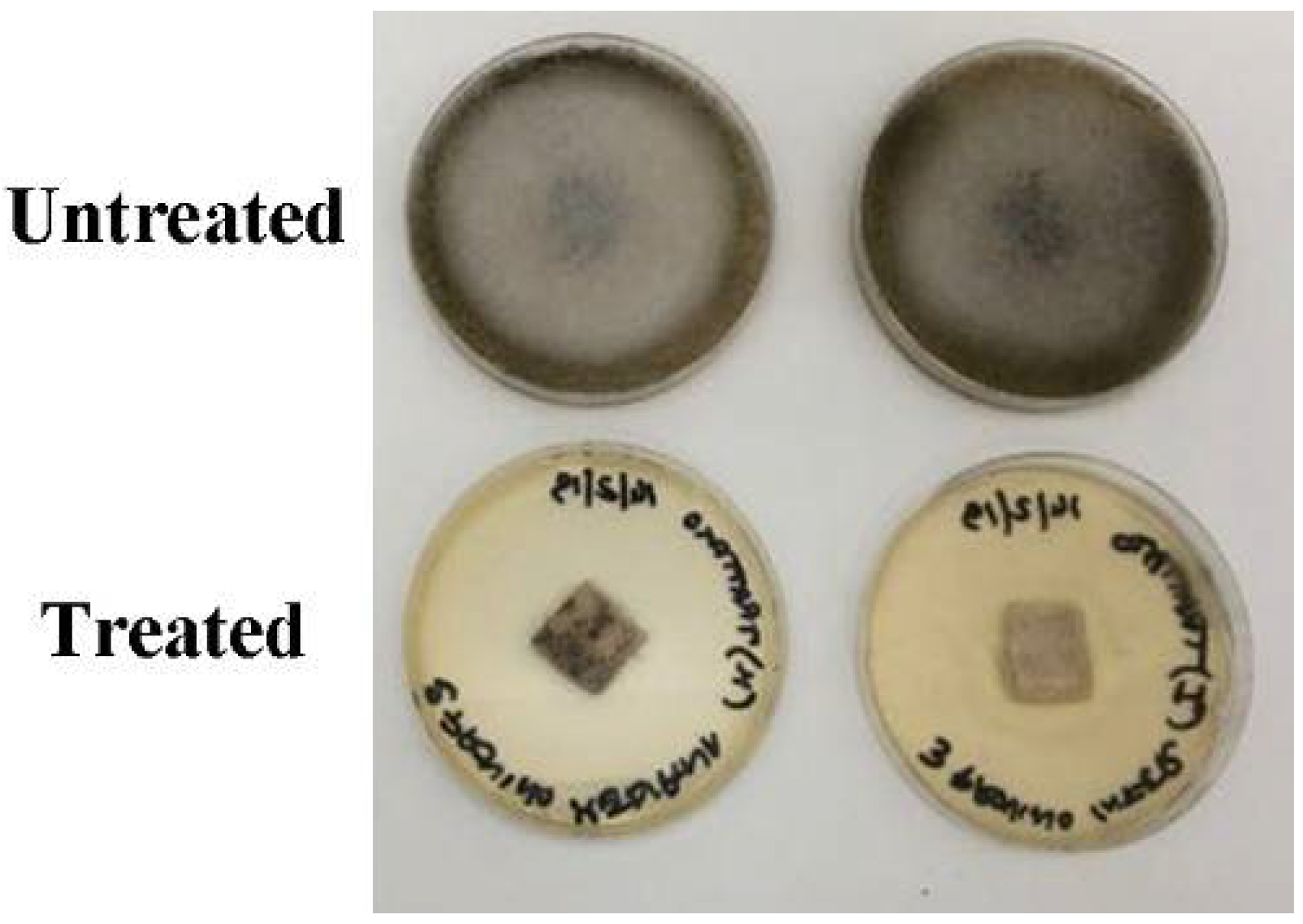
Table ane. Mod techniques: description of preparatory and pictorial layers.
Table 1. Modern techniques: description of preparatory and pictorial layers.
| Sample | Technique | Preparation | Pigment Layer |
|---|---|---|---|
| Ac | Acrylic | Industrial | Industrial colors: vivid cherry, ultramarine blue, green, yellow ocher |
| 5 | Vinyl | Industrial | Industrial colors: reddish blood-red, ultramarine blue, dark-green, yellowish ocher |
| Al | Alkyd | Industrial | Industrial colors: cadmium cherry, ultramarine blue, greenish world, yellow ocher |
Tabular array 2. Chemical composition (percent mean values) of C. zeylanicum EO.
Table 2. Chemical composition (percent mean values) of C. zeylanicum EO.
| North° | Component one | LRI two | LRI three | EO (%) 4 | EO (%) v |
|---|---|---|---|---|---|
| ane | α-thujene | 920 | 923 | 0.1 | 8.three |
| 2 | α-pinene | 938 | 943 | ii.7 | tr |
| 3 | camphene | 942 | 946 | 0.ii | tr |
| 4 | β-pinene | 985 | 986 | 0.2 | tr |
| 5 | α-phellandrene | 998 | 996 | 0.four | 1.4 |
| half-dozen | p-cymene | 1020 | 1026 | 3.viii | 8.2 |
| 7 | 1,8-cineole | 1022 | 1027 | 4.4 | 17.5 |
| 8 | γ-terpinene | 1050 | 1054 | tr | tr |
| ix | cis-linalool oxide | 1060 | 1058 | tr | tr |
| ten | linalool | 1089 | 1092 | iv.nine | 17.two |
| 11 | camphor | 1130 | 1126 | 0.1 | - |
| 12 | α-terpineol | 1019 | 1021 | 0.1 | tr |
| 13 | 4-terpinenyl acetate | 1283 | 1286 | 0.1 | tr |
| fourteen | O-anisaldehyde | 1250 | 1242 * | 0.1 | - |
| 15 | cinnamaldheyde | 1269 | 1275 | 66.0 | 24.v |
| 16 | eugenol | 1333 | 1331 | 4.1 | tr |
| 17 | β-caryophyllene | 1429 | 1426 | 5.eight | xix.2 |
| eighteen | (Eastward)-cinnamyl acetate | 1441 | 1439 | 5.five | - |
| xix | humulene | 1450 | 1454 | 0.4 | tr |
| 20 | eugenol acetate | 1480 | 1483 | 0.1 | - |
| 21 | O-methoxy cinnamaldheyde | 1507 | 1505 | 0.3 | - |
| 22 | δ-cadinene | 1529 | 1530 | 0.1 | tr |
| 23 | caryophyllene oxide | 1577 | 1583 | 0.3 | tr |
| 24 | benzyl benzoate | 1741 | 1739 | 0.iii | - |
| SUM | 100.0 | 96.three | |||
| Monoterpene hydrocarbons | 7.four | 17.9 | |||
| Oxygenated monoterpenes | 9.6 | 34.seven | |||
| Sesquiterpene hydrocarbons | vi.3 | 19.2 | |||
| Oxygenated sesquiterpene | 0.iii | - | |||
| Others | 76.4 | 24.5 |
Table three. Effectiveness of Zege sprays according to the number of sprays and time of incubation.
Table 3. Effectiveness of Zege sprays co-ordinate to the number of sprays and time of incubation.
| N. of Spray | Hours | ||
|---|---|---|---|
| ii | 5 | 24 | |
| 5 | − | − | − |
| 4 | +/− | − | − |
| 3 | + | + | − |
| 2 | + | + | + |
Table 4. pH values of canvases before and after treatment.
Table four. pH values of canvases before and after treatment.
| Color | Technique | Unaged | Aged | ||||||
|---|---|---|---|---|---|---|---|---|---|
| A-BT ane | A-AT 2 | AV iii | SD iv | A-BT | A-AT | AV | SD | ||
| Red | Ac five | 7.00 | vi.73 | −0.27 (northward.south.) | 0.32 | 6.63 | 6.83 | 0.20 (+) | 0.00 |
| V vi | 6.70 | six.67 | −0.03 (n.s.) | 0.06 | 6.93 | vi.47 | −0.47 (**) | 0.06 | |
| Al vii | vi.23 | 6.53 | 0.thirty (n.due south.) | 0.10 | 6.67 | half-dozen.30 | −0.37 (+) | 0.12 | |
| Bluish | Air conditioning | 6.83 | 6.73 | −0.x (due north.s.) | 0.10 | vi.67 | vi.77 | 0.x (northward.s.) | 0.ten |
| 5 | 6.73 | 6.67 | −0.07 (northward.s.) | 0.12 | 6.67 | half-dozen.lxx | 0.03 (n.s.) | 0.06 | |
| Al | 6.30 | half-dozen.53 | 0.23 (n.southward.) | 0.15 | 6.67 | half dozen.twoscore | −0.27 (*) | 0.06 | |
| Green | Ac | seven.27 | 6.83 | −0.43 (+) | 0.23 | 6.87 | 6.93 | 0.07 (north.due south.) | 0.06 |
| V | 6.63 | 6.eighty | 0.17 (*) | 0.06 | 6.80 | 6.70 | −0.ten (due north.s.) | 0.10 | |
| Al | vi.17 | 6.27 | 0.10 (north.s.) | 0.ten | 6.27 | half-dozen.17 | −0.10 (n.south.) | 0.20 | |
| Ocher | Air-conditioning | vii.03 | half dozen.70 | −0.33 (*) | 0.06 | 6.47 | 6.73 | 0.27 (+) | 0.15 |
| V | 6.47 | 6.57 | 0.10 (due north.s.) | 0.10 | 6.67 | half dozen.seventy | 0.03 (n.s.) | 0.06 | |
| Al | half dozen.43 | vi.40 | −0.03 (n.s.) | 0.23 | half-dozen.50 | 6.40 | −0.10 (northward.south.) | 0.x | |
Tabular array 5. Mean values of the colorimetric parameters.
Tabular array 5. Hateful values of the colorimetric parameters.
| Unaged Canvass (Hateful Values) | Aged Canvas (Mean Values) | ||||||||||||||||
|---|---|---|---|---|---|---|---|---|---|---|---|---|---|---|---|---|---|
| Earlier Treatment | After Treatment | Before Treatment | After Treatment | ||||||||||||||
| Color | Sample | 50* | a* | b* | L* | a* | b* | ∆East | SD-DE i | L* | a* | b* | Fifty* | a* | b* | ∆Eastward | SD-DE |
| Carmine | A 2 | 48.9 | 57.5 | 46.v | 49.5 | 58.0 | 46.5 | ane.15 | 0.44 | 47.5 | 55.ii | 40.eight | 46.9 | 54.8 | 40.4 | 0.82 | 0.09 |
| V 3 | 43.three | 58.7 | 30.ix | 43.six | 58.seven | 30.6 | 0.60 | 0.22 | 42.viii | 57.five | 28.8 | 42.6 | 57.5 | 30.one | one.33 | 0.21 | |
| Al 4 | 50.viii | 54.7 | 37.4 | fifty.8 | 55.iv | 38.2 | 1.06 | 0.17 | 48.0 | 53.ii | 35.3 | 49.1 | 53.7 | 35.8 | 1.35 | 0.17 | |
| Blue | A | 28.0 | 26.two | −51.ix | 27.two | 27.1 | −52.seven | 1.4 | 0.05 | 29.ii | 28.3 | −56.3 | 27.nine | 29.2 | −55.9 | 1.73 | 0.08 |
| V | 29.0 | 34.two | −65.one | 27.2 | 29.7 | −56.1 | ten.3 | four.64 | 32.half-dozen | 30.2 | −63.8 | 30.3 | 33.ix | −65.9 | 4.89 | 0.28 | |
| Al | 26.0 | 15.4 | −30.viii | 25.three | 15.8 | −31.2 | 3.73 | ane.seventy | 32.ii | 21.six | −56.6 | 32.2 | 20.2 | −54.iv | 2.69 | 0.45 | |
| Green | A | 35.7 | −3.33 | 7.79 | 35.8 | −three.eighteen | seven.51 | 0.35 | 0.22 | 35.7 | −2.97 | 8.59 | 34.ix | −2.98 | vii.94 | 1.07 | 0.21 |
| V | 37.7 | −7.36 | 12.eight | 37.9 | −seven.35 | 12.five | 0.44 | 0.07 | 37.vii | −vii.41 | xiii.5 | 37.0 | −7.28 | 13.0 | 1.09 | 0.36 | |
| Al | 31.6 | −9.32 | six.26 | 32.9 | −10.eight | 7.39 | two.28 | i.00 | 36.5 | −9.55 | iv.81 | 36.four | −9.55 | 5.fourteen | 1.56 | 0.50 | |
| Ocher | A | 63.3 | xv.two | 45.half-dozen | 63.4 | fifteen.3 | 45.5 | 0.45 | 0.15 | 61.three | 15.i | 45.2 | 61.iii | 15.2 | 44.8 | 1.48 | 0.81 |
| V | 65.5 | 14.v | 48.6 | 64.6 | 14.6 | 47.9 | 1.xv | 0.20 | 65.four | fourteen.5 | 48.1 | 64.4 | 14.8 | 48.five | ane.sixty | 1.04 | |
| Al | 57.7 | 17.iii | 45.8 | fifty.1 | xv.4 | 36.three | 12.five | fourteen.three | 49.8 | fourteen.9 | 34.4 | 49.3 | 14.7 | 33.8 | 0.82 | 0.50 | |
| Publisher's Notation: MDPI stays neutral with regard to jurisdictional claims in published maps and institutional affiliations. |
© 2022 by the authors. Licensee MDPI, Basel, Switzerland. This article is an open access article distributed nether the terms and weather condition of the Creative Commons Attribution (CC BY) license (https://creativecommons.org/licenses/by/4.0/).
Source: https://www.mdpi.com/2076-2607/10/2/205/htm

Post a Comment for "In Fig 2741 and Both Batteries Are Ideal What Is the Arte at Which Energy"